Disconnected impact
Environmental degradation felt remote, reducing motivation to change daily behavior.
AUGMENTED REALITY · CLIMATE ACTION
An immersive experience that makes the environmental impact of everyday habits visible, personal and emotionally difficult to ignore.
THE CHALLENGE
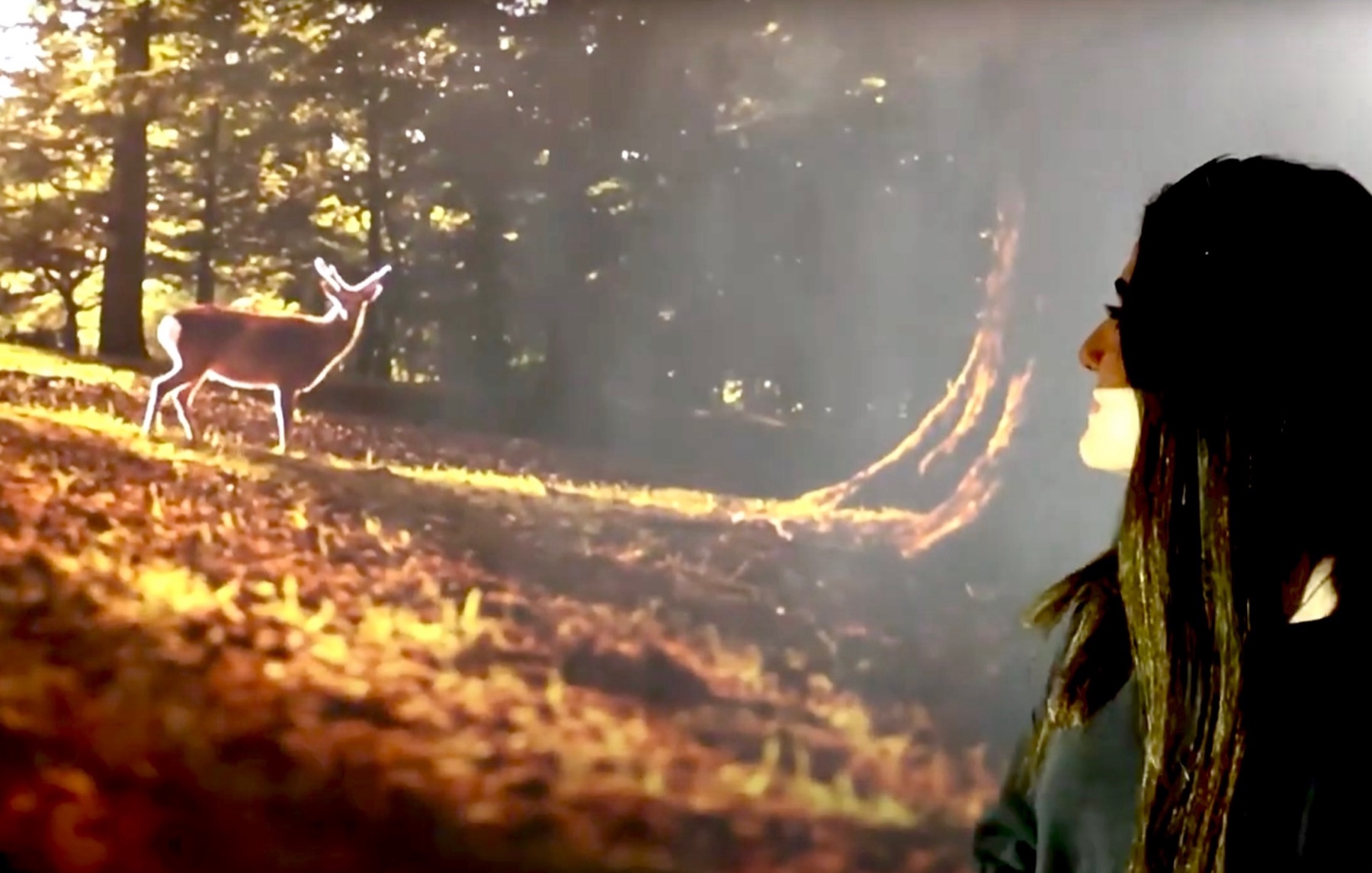
People in wealthy developed countries may understand climate change intellectually without feeling its immediate effects. That distance makes everyday habits—and their consequences—easy to overlook.
OH DEER! proposes an augmented-reality environment designed to respond to each visitor’s choices in real time and bridge the gap between knowledge and action.
Storyboard and low-fidelity concept video
Brainstorming and concept development
Feedback synthesis and design iteration
Final concept-video editing
01 · UNDERSTANDING THE USER
Interviews explored environmental awareness, daily behavior and openness to technology-led change among people who are often insulated from climate impacts.
Environmental degradation felt remote, reducing motivation to change daily behavior.
People did not always recognize how specific routines contribute to climate change and biodiversity loss.
Facts alone rarely created the emotional connection needed to inspire action.
Show cause and effect in real time.
Use familiar, local environments.
Pair emotional storytelling with tangible actions.
Let augmented reality sustain attention.
02 · STORYBOARDING
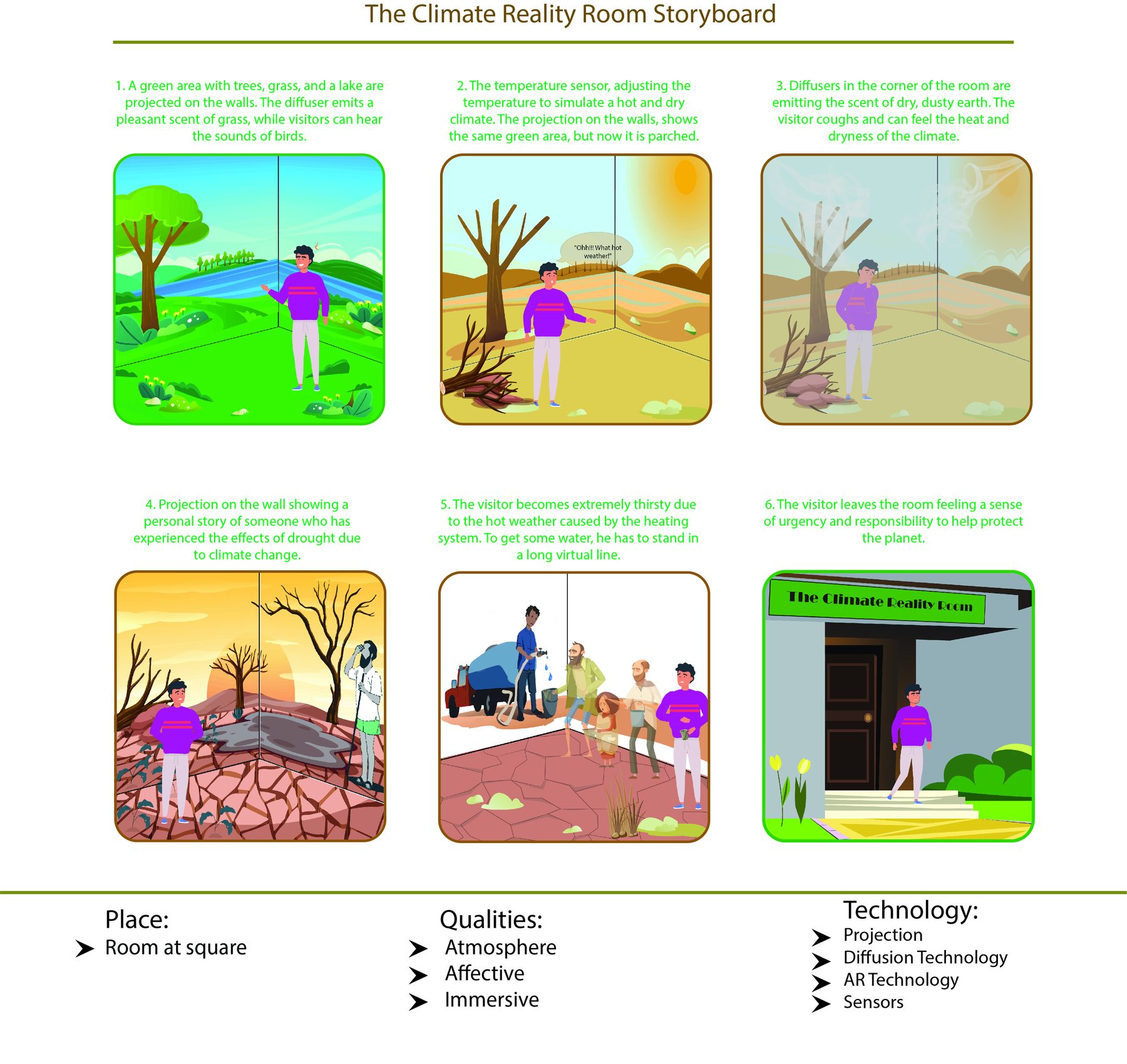
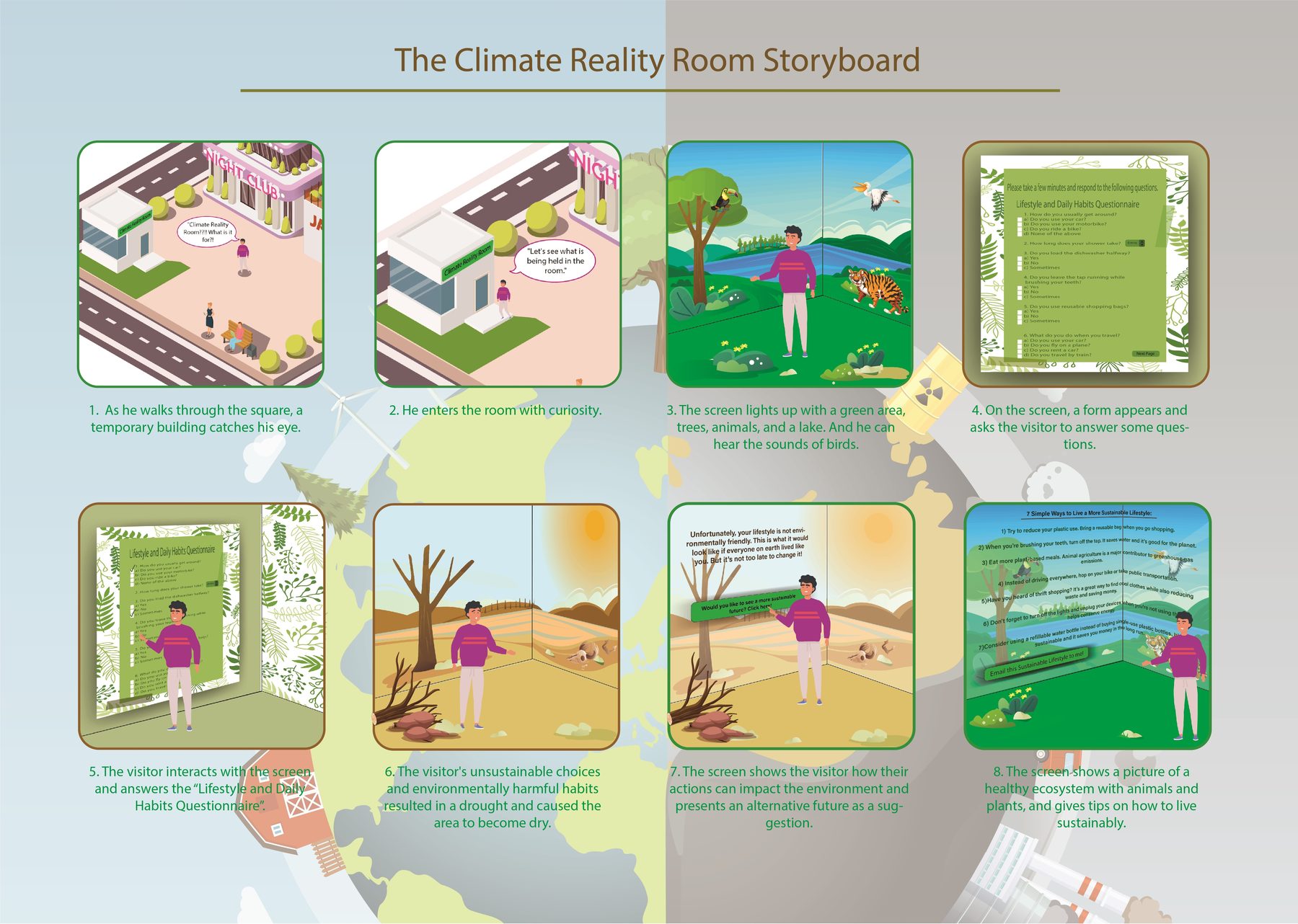
The storyboards mapped how a visitor enters the Climate Reality Room, makes choices and watches the surrounding ecosystem respond.
LOW-FIDELITY PROTOTYPE
The video sketch visualized the full encounter—from discovering the installation and interacting with projected content to seeing personal habits reshape the environment. It created a shared object the team could test and improve.
03 · TEST & REFINE
Six targeted changes made the experience more immersive, locally relevant and hopeful—without softening its environmental message.
A tablet could detach visitors from the experience.
The tablet was removed and the interface became part of the projected augmented-reality environment.
The message needed to feel more personal and emotionally engaging.
Documentary-style storytelling helped visitors relate to the animals and habitats affected by their actions.
Visitors wanted environments closer to the places where they live.
Localized and more interactive scenes showed environmental change in familiar surroundings.
A purely negative ending risked leaving visitors feeling helpless.
The experience shows how sustainable choices can restore the landscape and offers concrete actions visitors can take.
The environmental journey needed a stronger emotional thread.
A voice-over guides the journey and deepens empathy for animals and ecosystems affected by human behavior.
“Climate Reality Room” sounded serious and might not attract a broad audience.
The playful name created a less didactic entry point while keeping the climate message intact.
FINAL CONCEPT
Visitors answer questions about travel, food, energy and shopping. Their choices transform a lush projected habitat into a depleted landscape—or reveal how more sustainable habits can help it recover.
Watch the final concept video ↗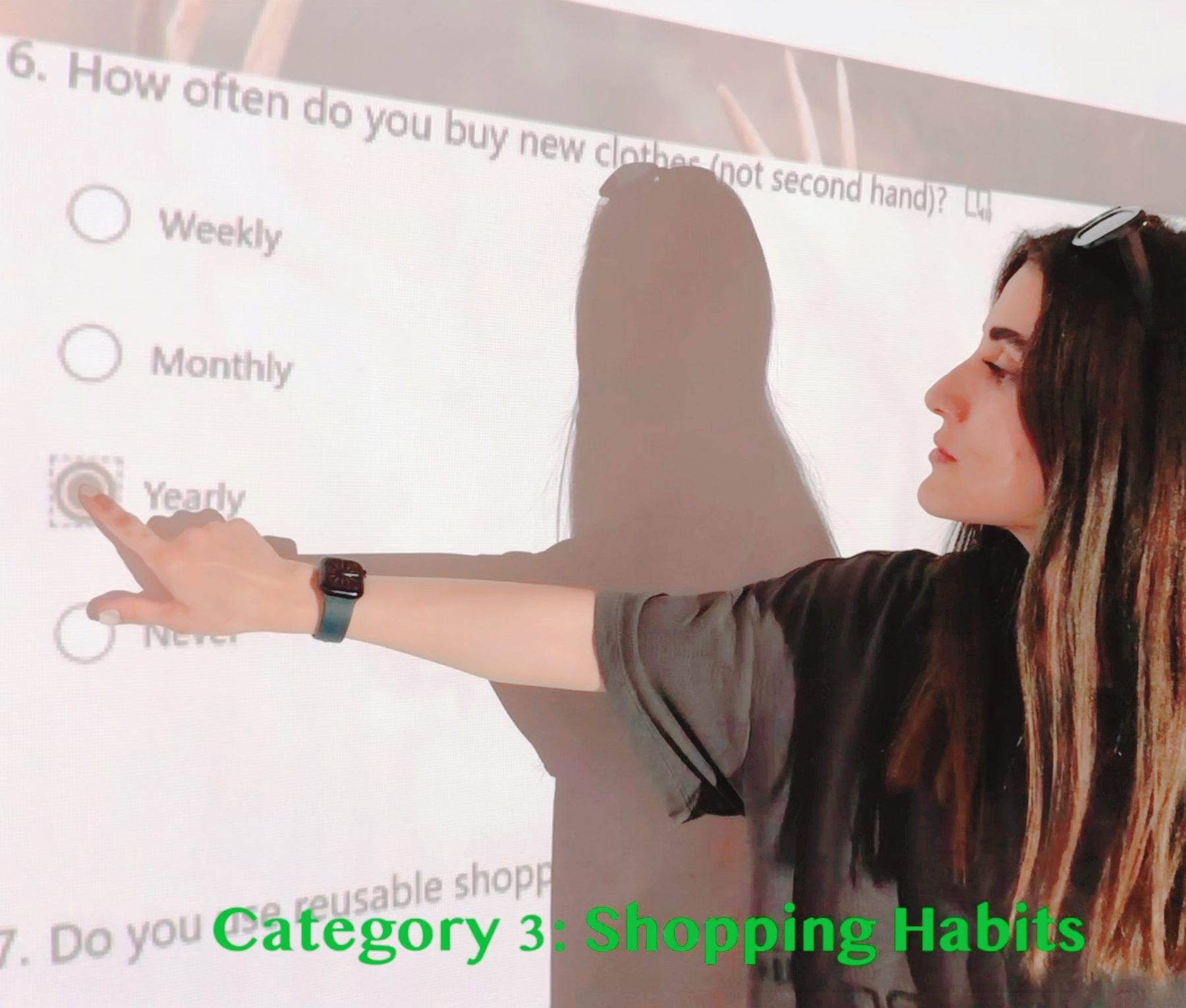
Enter a vivid living ecosystem.
Share everyday habits.
See the environment respond.
Leave with practical actions.
OUTCOME
The concept explored how immersive media could connect everyday choices with biodiversity loss, combining emotional engagement and responsive feedback to make sustainable behavior feel relevant.
Emotional engagement can help bridge the gap between knowing and acting.
Iterative feedback made the concept more immersive, inclusive and actionable.
NEXT STEPS